
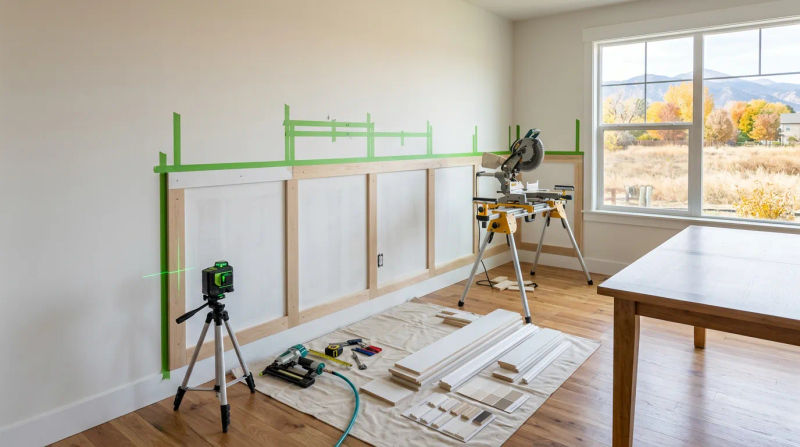
As a field superintendent, I’ve learned that the moment the first snows dust the ground in Peoria, homeowners start turning their attention indoors. The season for big outdoor projects is winding down, and it's the perfect time to plan those interior upgrades that add character and value to your home. One of the most popular projects my team and I handle is wainscoting installation. It’s a timeless look that can transform a plain dining room, entryway, or bedroom.
But the first question on everyone's mind is always the same: "What's this going to cost?" It’s a fair question, and one that deserves a straightforward answer. My goal here isn't to sell you anything, but to give you the honest, practical information I've gathered over 12 years of remodeling homes. I want you to feel confident in your budget and know exactly what you’re paying for.
Average Costs in Peoria
Let's get right to it. The wainscoting installation cost Peoria homeowners can expect typically falls somewhere between $15 and $45 per linear foot, including both materials and professional labor. That's a wide range, so let's break down what that looks like for a common project.
For a standard 12' x 14' dining room (which has about 52 linear feet of wall space), your total investment could be:
- Basic Installation: Using paint-grade materials like MDF with a simple chair rail and box design, you might budget between $900 and $1,800.
- Custom Installation: For more intricate designs like raised panels, using stain-grade wood like oak, and navigating more complex room layouts, the cost could range from $2,000 to $4,000 or more.
This price includes the skilled labor to ensure every cut is precise, every joint is tight, and the final result looks seamless. The chair rail and paneling labor cost is a significant part of the investment because this is a craft that requires patience and expertise.
Factors That Affect Price
That price range is a good starting point, but several key factors will determine where your specific project lands. Understanding these will help you have a much more productive conversation with any contractor.
1. Material Choice: MDF vs. Wood This is the biggest driver of your wainscoting cost. The MDF vs wood wainscoting price debate comes down to budget, finish, and durability.
- MDF (Medium-Density Fiberboard): This is an engineered wood product that is very stable, smooth, and affordable. It’s the perfect choice if you plan to paint your wainscoting. Here in Peoria, where our dry climate and seasonal temperature swings can cause natural wood to move, MDF's stability is a huge advantage. It won't shrink or expand, preventing unsightly gaps from forming over time.
- Real Wood (Poplar, Pine, Oak): If you want a stained finish or simply love the classic appeal of real wood, this is the way to go. Poplar is a great, smooth paint-grade option, while oak offers a beautiful grain for staining. However, wood is more expensive and requires careful acclimation before installation to minimize movement in our local climate.
2. Style and Complexity The more intricate the design, the more labor is required.
- Simple Chair Rail: The most basic and affordable option.
- Picture Frame or Box Molding: This involves creating rectangular "boxes" on the wall below a chair rail. It requires more cuts and precision.
- Raised or Recessed Panel: This is the most traditional and complex style, involving building out panels for a three-dimensional look. It requires the most skill and time, significantly increasing labor costs.
3. Wall Condition and Prep Work I can tell you from experience that no wall is perfectly straight - not even in the newer 2010s-era homes common in Peoria. Drywall seams, subtle bows, and uneven corners all need to be addressed for the wainscoting to sit flat and look professional. A good contractor will spend time shimming low spots and scribing the trim to match the wall's contours. This prep work is built into the labor cost and is essential for a quality finish.
4. Room Layout A simple, square room with four uninterrupted walls is the most straightforward. The cost will increase if the room has:
- Multiple inside and outside corners
- Windows and doorways to cut around
- Electrical outlets and switches that need to be extended
- Curved walls or staircases
5. Finishing (Painting or Staining) Does the quote include the final finish? A professional paint job on wainscoting involves caulking all seams, filling nail holes, sanding everything smooth, priming, and applying at least two top coats. It’s a meticulous process. If you’re handy, you might save some money by doing the painting yourself, but be sure to clarify this upfront.
How to Get the Best Value
Getting the best value doesn’t mean finding the cheapest price. It means making smart decisions that give you a durable, beautiful result you'll love for years.
- Match the Material to the Finish: If you're painting, save money and get a more stable result with MDF. Don't pay the premium for stain-grade wood if you're just going to cover it with paint.
- Consider Doing Some of the Work: If you're comfortable, you can reduce costs by moving furniture, removing old baseboards, and handling the final painting.
- Bundle Projects: If you're already hiring a contractor for another job, like painting or flooring, ask about adding wainscoting. You may get a better overall price by bundling the work.
- Prioritize Quality Installation: A poor installation with gapping joints and sloppy cuts will devalue your home, not add to it. The chair rail and paneling labor cost pays for expertise. It’s better to choose a simpler design installed by a true craftsman than a complex one done poorly.
Questions to Ask Your Contractor
When you get an estimate, you're not just buying materials; you're hiring a partner for your home project. Here are a few questions I always encourage homeowners to ask:
- Can you provide an itemized estimate? This helps you see the breakdown between materials and labor and understand exactly what's included.
- How will you prepare my walls before installation? This shows they're thinking about the details that ensure a quality finish.
- How do you acclimate wood materials to our Peoria climate? This is a critical question for any wood installation in our area to prevent future issues.
- Is caulking, filling nail holes, and final painting included in this price?
- How will you protect my floors and manage dust during the project?
As the fall season settles in, it's a great time to get those indoor projects planned. At A1M Construction, we believe in providing clear, itemized estimates so you can compare materials and scope confidently, with no surprises.
After more than a decade of working on homes in this area, I’ve seen how a well-executed finish carpentry project can completely elevate a space. It’s an investment in your home’s character and your enjoyment of it. By understanding the costs and asking the right questions, you can make sure that investment is a smart one. For a personalized estimate in Peoria, contact my team at A1M Construction for a free consultation.