

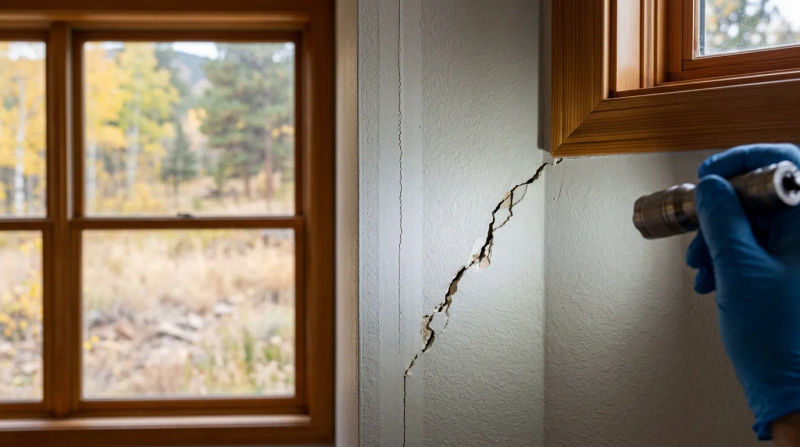
As a field superintendent and remodeler, I’ve spent more than a decade working on homes in and around our communities. One of the most frequent questions I get from homeowners, especially as the seasons change, is about cracks appearing in their drywall. You might be relaxing at home as those crisp, cooler nights start to set in, and you glance up to see a faint, spidery line that wasn’t there last month. It’s a common discovery, and the first question is always the same: Is this a big deal?
It’s a valid concern. A crack can be anything from a minor cosmetic flaw to a symptom of a much larger issue. Here in Saddle Ridge, our unique mountain climate can play a big role. The sharp temperature drops from day to night cause building materials to expand and contract, and your drywall often takes the brunt of that movement. My goal is to help you understand what you're seeing so you can make an informed decision about what to do next.
Common Signs and Symptoms
Not all drywall cracks are created equal. The first step in diagnosing the problem is to carefully observe the crack itself. Its size, shape, and location can tell you a lot about the potential cause. When my team and I assess a home, we look for specific drywall crack signs that point us in the right direction.
Here are the most common types you might encounter:
- Hairline Cracks: These are very thin, straight cracks that often appear along the seams where two sheets of drywall meet. You might see them running vertically or horizontally along a wall or ceiling. They can also appear around window and door frames.
- Jagged or Diagonal Cracks: Cracks that run diagonally from the corners of doors or windows are often a red flag. These are typically wider than hairline cracks and suggest structural movement or stress.
- Cracks with Discoloration: If you see a brown or yellow stain around a crack, it’s a strong indicator of water damage. The moisture has likely weakened the drywall from behind, causing it to crack and stain.
- Nail or Screw “Pops”: These aren’t cracks, but they are related. You might see a small, circular bump or crack where a drywall screw or nail has pushed through the surface paint and joint compound. This happens when the wood framing behind the drywall shrinks or moves.
- Spiderweb Cracks: A network of fine cracks spreading out from a central point usually indicates an impact or a spot where the house has settled significantly.
Seeing drywall cracks in Saddle Ridge is particularly common, especially in newer homes that are still going through their initial settling period. The key is to distinguish between what’s normal and what needs a professional eye.
What Causes This Problem
Understanding the root cause is critical because simply patching a crack without addressing the underlying issue means it will almost certainly return. Over the years, I’ve traced these cracks back to a handful of common culprits.
1. Natural Settling and Truss Uplift Nearly every home settles over time. The wood framing behind your drywall dries out and shrinks during the first few years after construction. This movement puts stress on the rigid drywall panels, causing seams to crack or fasteners to pop. Another related issue is “truss uplift,” where the wooden trusses that form your roof structure arch upward in winter due to temperature and moisture differences between the attic and the living space. This can lift the ceiling drywall, creating a crack where the ceiling meets the interior walls.
2. Temperature and Humidity Fluctuations This is a major factor in our area. The phenomenon of drywall seam cracking temperature swings is something we see often. As temperatures cool dramatically overnight, different materials in your home contract at different rates. Wood studs shrink, but the metal corners and drywall fasteners don't. This differential movement puts immense stress on the taped seams, leading to those familiar hairline cracks. The indoor humidity changes between summer and winter also cause wood to swell and shrink, contributing to the problem.
3. Poor Drywall Installation Sometimes, the problem isn't the house - it's the initial workmanship. If the drywall installer didn't use enough mud or used the wrong kind of tape, the seams will be weak. A common shortcut is not using enough screws to secure the drywall sheets to the studs, which allows for too much movement. These installation flaws create built-in failure points that will eventually reveal themselves as cracks.
4. Significant Structural Issues This is the most serious cause. If your home’s foundation is shifting or sinking, it will create stresses that travel up through the entire structure. This often results in large, jagged, diagonal cracks, especially over doorways and windows. Other signs that point to foundation trouble include doors that stick or won’t latch properly, and windows that are difficult to open or close. Water damage from a leaking roof or plumbing can also saturate and weaken framing, leading to structural sagging and prominent cracks.
When to Call a Professional
So, you’ve identified a crack. The next question is when to patch drywall cracks yourself and when to bring in an expert. My advice is to err on the side of caution, but here is a general guide to help you decide.
You can likely handle a repair yourself if:
- The crack is a single, straight hairline crack on a flat wall or ceiling seam.
- There is no discoloration or moisture present.
- The crack hasn't come back after a previous repair.
- The doors and windows in the room operate normally.
For these minor issues, a simple repair with flexible caulking or re-taping and mudding might be all you need. It's often wise to wait a full year to see how the crack behaves through all four seasons before making a cosmetic repair.
You should call a qualified professional for an inspection if you see any of these warning signs:
- The crack is wider than 1/8 of an inch.
- You see multiple, large, or jagged cracks, especially those running at a 45-degree angle from corners.
- The crack is accompanied by discoloration, suggesting a water leak.
- Doors and windows nearby are sticking, which points to frame movement.
- You notice the floor is uneven or sloping.
- The crack reappears or gets worse after you’ve repaired it.
These symptoms suggest the problem is more than just cosmetic. An experienced professional can diagnose the root cause - whether it’s foundation movement, framing issues, or significant moisture intrusion - and recommend a lasting solution. Just patching over these cracks is like putting a bandage on a broken bone; it hides the problem but doesn't fix it.
Conclusion
Finding a crack in your drywall can be unsettling, but it doesn't always signal a disaster. By observing the type of crack and understanding the common causes - from normal settling and temperature swings to more serious structural shifts - you can get a good sense of what you're dealing with. Minor hairline cracks are often just a part of a home aging gracefully, especially in a climate like ours.
However, it's crucial not to ignore the more alarming drywall crack signs. Acting early and getting a proper diagnosis for significant or recurring cracks can save you from far more expensive and complicated repairs down the road. Don’t wait for a small problem to become a big one.
If you notice any of these signs, contact a local construction professional for an inspection. They can help you get to the bottom of the issue and ensure your home remains safe, sound, and beautiful.