
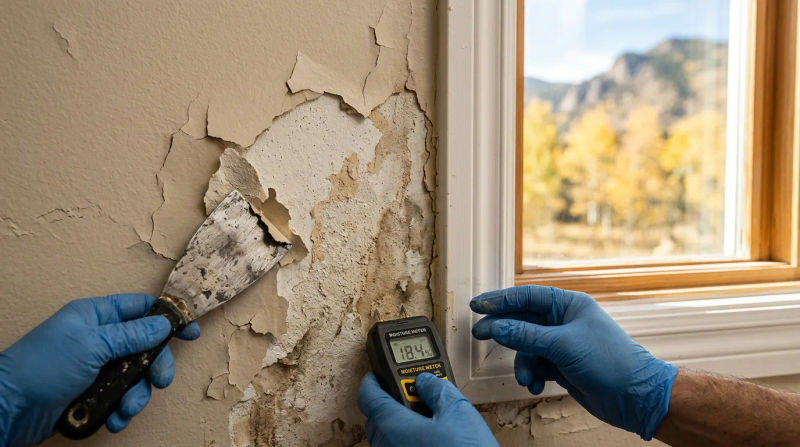
It’s a classic October scene here in Blue Sky: the air gets crisp, the first snows dust the peaks, and we finally turn on our furnaces for the season. You’re settling in for a cozy evening when you notice it - a small bubble in the paint near a window, or a section along an exterior wall that’s starting to flake. It wasn’t there this summer. What gives?
My name is Jordan Ramirez, and as a field superintendent who has spent over a decade remodeling homes in this area, I can tell you that you’re not imagining things. The dramatic temperature swings we get in the fall are notorious for exposing hidden issues with interior paint. That shift from a warm day to a freezing night puts stress on our homes, and paint is often the first place we see the evidence.
Understanding why your paint is failing is the first step to a lasting fix. Just painting over the problem will only lead to more frustration down the road. In this guide, I’ll walk you through what my team and I look for when diagnosing paint problems, what causes them, and when it’s time to call for an expert opinion.
Common Signs and Symptoms
When we talk about paint peeling, it can show up in a few different ways. Identifying the specific type of failure can give us clues about the root cause. Here are the most common signs I see on job sites:
- Bubbling or Blistering: This is when the paint lifts off the underlying surface, creating bubbles or blisters filled with air or sometimes even moisture. These often appear on walls exposed to humidity (like bathrooms) or on exterior-facing walls that get cold.
- Flaking and Peeling: This is what most people picture - the paint is literally breaking away from the wall in small flakes or large, peeling sheets. This is a clear sign of a loss of adhesion.
- Alligatoring: This looks like what it sounds like: a cracked, scaly pattern that resembles an alligator’s skin. This is almost always caused by applying a hard, rigid coating (like an oil-based paint) over a softer, more flexible layer (like a latex paint), or by applying a topcoat before the primer or base coat has fully cured.
- Chalking: If you wipe your hand across the wall and it comes away with a fine, powdery residue, that’s chalking. It’s essentially the paint film breaking down over time, often due to sun exposure on an interior wall that gets a lot of direct light.
You’ll most often spot these issues near windows and doors, in corners where walls meet the ceiling, in bathrooms and kitchens, and on any wall that is on the outside of your home. These are all areas where temperature and moisture levels fluctuate the most.
What Causes This Problem
Paint failure is rarely about the paint itself; it's almost always about the conditions on the surface or in the environment. Here are the seven main culprits my team and I investigate when we see paint peeling indoors Blue Sky.
1. Moisture: This is the number one enemy of a good paint job. When water or water vapor gets behind the paint film, it pushes the paint away from the surface, breaking the adhesive bond. This leads directly to bubbles and peeling. The moisture can come from:
- High Humidity: Steam from long, hot showers in a bathroom without an adequate exhaust fan is a classic example.
- Condensation: This is a big one for us in Colorado. As we head into fall and winter, the warm, moist indoor air condenses on cold surfaces, especially windows and poorly insulated exterior walls. This explains why paint bubbles on walls in fall - the surface gets damp, and the paint lifts.
- Leaks: A hidden plumbing leak, a failing window seal, or an ice dam on the roof can introduce water into your wall cavity, causing paint to peel from the inside out.
2. Poor Surface Preparation: I can't stress this enough: a lasting paint job is 90% prep work. If you paint over a surface that is dirty, dusty, or greasy, the paint is sticking to the grime, not the wall. Blue Sky’s dry fall air can contribute to dusty surfaces that go unnoticed before painting. Painting over a glossy, shiny surface without sanding or priming first is another guaranteed way to see peeling down the line.
3. Extreme Temperature Swings: Paint needs to cure in a stable environment. Applying paint on a warm afternoon and then having the temperature plummet overnight can interfere with how the film forms. These paint adhesion problems cold nights cause the paint to cure improperly, leading to a weak bond that fails prematurely.
4. Using the Wrong Paint or Primer: Not all paints are created equal. Using a standard interior latex paint in a high-moisture area like a bathroom is asking for trouble. Similarly, painting a latex-based paint over an old oil-based paint without the right bonding primer will almost certainly lead to peeling.
5. Age and Previous Layers: The homes in the Blue Sky area, many built in the 1990s and 2000s, are now at an age where they've likely been repainted a few times. If any of those previous paint jobs were done with poor prep, you're essentially building on a weak foundation. The weight and tension of the new coat can pull the old, poorly-adhered layers right off the wall.
6. Building Movement: All houses settle and shift. The single-family homes in our area are no exception. This movement can cause small, hairline cracks in the drywall. While often not a structural concern, these cracks break the paint film, creating an entry point for moisture and a starting point for peeling.
7. Rushing the Job: Patience is critical. Applying a second coat of paint before the first is fully dry, or painting over primer that hasn’t had time to cure, traps solvents and moisture. This creates a weak layer within the paint system that will eventually fail.
When to Call a Professional
Some small paint issues can be a straightforward DIY fix, but it's important to know when to bring in an experienced professional.
Consider a DIY fix if:
- The peeling is very small and localized (e.g., a single spot smaller than your hand).
- You know the direct cause, like a water splash or a furniture scuff, and there's no underlying moisture issue.
- You are confident in your ability to properly scrape, sand, clean, prime, and repaint the area according to the paint manufacturer's directions.
You should call a professional when:
- The paint peeling is widespread, occurring on multiple walls or in several rooms.
- You see signs of moisture - like discoloration, soft spots in the drywall, or a musty smell - but can't locate the source. This could indicate a more serious leak that needs to be addressed before any painting can happen.
- The problem keeps coming back. If you’ve repaired a spot and it peels again, there’s an underlying issue that a professional can diagnose.
- The peeling paint is creating significant dust and debris, especially in homes where the underlying layers might be of unknown origin.
- You have the open-concept interior common in many 1990s-2000s homes, where walls flow from one room to the next. Achieving a seamless, professional finish in these spaces is challenging and often best left to a team with the right tools and experience.
Conclusion
Seeing your interior paint start to fail can be disheartening, especially when you’ve invested time and money into making your home look great. But remember, peeling paint is a symptom, not the core problem. Before you reach for a paintbrush, take the time to investigate the cause. Most often, the culprits are moisture and inadequate surface preparation.
Addressing a small area of peeling paint now can prevent a much larger, more expensive project later on. By understanding what causes these issues, you can ensure that your next paint job is your last for a long time.
If you notice any of these signs of paint peeling indoors Blue Sky, contact a local, qualified professional for an inspection. They can help you accurately diagnose the problem and recommend a solution that lasts.