
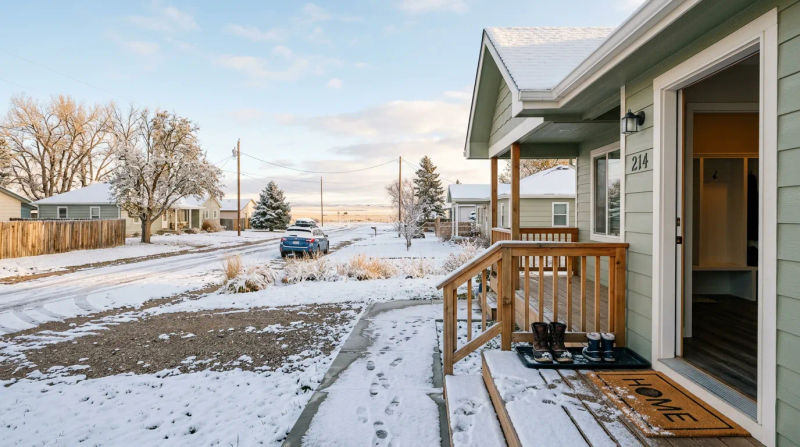
As a Field Superintendent with A1M Construction, I’ve spent the better part of 12 years working on homes right here in our corner of Colorado. I’ve seen firsthand what our unique climate can do to a house. Here in Byers, the first snowflakes in October aren't just a pretty sight; they’re a signal that our homes are about to face their toughest test of the year. The entryway, in particular, becomes a battleground against snow, mud, and grit. If your entryway flooring isn’t up to the task, you’re not just dealing with a mess - you’re risking long-term damage.
That’s why my team and I believe in being proactive. Thinking about your entryway flooring Byers homes need before the holiday traffic begins is one of the smartest investments you can make in your property. It’s about protecting your home and making life a little easier when the winter winds start to blow.
Byers Weather Challenges
Living on the High Plains means we get a special kind of winter. It’s not just the snow; it’s the cycle of melting and refreezing, the fine grit that gets tracked in on every boot, and the extreme difference between the cold, wet outdoors and our warm, dry indoor air. This combination is incredibly tough on floors, especially at the main entrance.
Here’s what we’re up against:
- Meltwater Intrusion: Snow doesn't just sit on your floor; it melts. This water, mixed with de-icing salts and dirt, will find any crack or unsealed seam. It can seep under your flooring, damaging the subfloor and creating a breeding ground for mold.
- Abrasive Grit: The sand and small gravel used on our roads are lifesavers for driving but killers for flooring finishes. This grit acts like sandpaper underfoot, scratching and dulling the surface of your floor with every step.
- Thermal Shock: When you have a frigid floor meeting the warm, dry air of your heated home, materials can expand and contract. Over time, this can cause planks to gap, tiles to loosen, and seams to fail. At A1M Construction, we see this often in Byers, where a poorly installed floor just can't handle the seasonal stress.
Many of the homes here in Byers were built during the 1990s and 2000s. These houses are great, with modern, open-plan layouts. But it also means your entryway is often the first thing you see and is visually connected to your main living space. It also means the original builder-grade flooring has now endured 20 to 30 of these harsh winters and is likely showing its age.
Best Practices for Local Homeowners
So, how do you choose an entryway floor that can stand up to a Byers winter and still look great? It comes down to two key factors: the right material and a flawless installation.
When homeowners ask me about tile vs LVP for snowy entryways, it’s a great conversation because both are excellent choices, but they have different strengths.
Porcelain or Ceramic Tile:
- Pros: Tile is incredibly durable and completely waterproof. It's almost impossible to scratch with grit, and cleaning up muddy puddles is simple. With so many styles available, you can get the look of natural stone or even wood.
- Cons: It can be cold underfoot (though radiant in-floor heating is an amazing solution). The grout lines need to be properly sealed to prevent staining, and you'll want to choose a tile with a bit of texture to avoid it being slippery when wet.
Luxury Vinyl Plank (LVP):
- Pros: LVP is a fantastic modern solution. It's warmer and softer underfoot than tile, and it’s highly water-resistant. The top “wear layer” is tough and can handle a lot of traffic. It's also great at mimicking the look of real hardwood, allowing for a seamless visual flow from the entry into the rest of the home.
- Cons: While durable, a sharp rock stuck in a boot tread can potentially gouge or scratch LVP. The seams between planks are the weak point; if water gets in, it can cause problems. This is why professional installation is non-negotiable.
Beyond the material itself, we need to talk about transitions. The spot where your entryway flooring meets the carpet or hardwood of your living room is a critical failure point. We always recommend using the best floor transitions for wet boots - solid, low-profile transitions that are fully sealed. This small detail prevents water from wicking under your main flooring and causing widespread damage.
Local Resources and References
While my team at A1M Construction handles the expert installation, choosing the material is a personal decision. I always advise homeowners to get physical samples. Don’t just rely on pictures online. Take a few tile and LVP samples home and see how they look in your entryway’s specific lighting throughout the day. See how they feel underfoot.
When you're looking at materials, ask about their durability ratings. For tile, look for a PEI rating of 4 or 5, which indicates it's tough enough for heavy residential traffic. For LVP, ask about the thickness of the wear layer - 20 mil is a great standard for a high-traffic area like an entryway. A quality material is the foundation of a long-lasting floor.
Choosing a Local Expert
I can't stress this enough: the best entryway flooring material in the world will fail if it's not installed correctly. In a place like Byers, a local expert who understands our climate makes all the difference. A proper installation involves more than just laying down planks or tiles.
It involves:
- Subfloor Assessment: Is your subfloor level and free of moisture? Any imperfections here will translate to the finished floor.
- Proper Underlayment: Using the right moisture barrier or underlayment is critical for protecting the flooring and subfloor.
- Meticulous Sealing: Every seam, edge, and transition needs to be installed and sealed perfectly to create a waterproof barrier. This is what stops that snowmelt from getting where it shouldn’t.
A1M Construction has served Byers homeowners for years, and we’ve built our reputation on this kind of detailed, quality-focused work. We know which materials perform best here and exactly how to install them to withstand the freeze-thaw cycles and heavy foot traffic. We treat every project like it’s for one of our own neighbors because, most of the time, it is.
Conclusion
Your entryway is your home's first line of defense against our tough Colorado winters. Choosing a durable, water-resistant material like porcelain tile or high-quality LVP is the first step. The second, and most crucial, step is ensuring it's installed by a team that understands the specific challenges our local weather presents.
Don't wait for the first big snowstorm to reveal the weaknesses in your current floor. If you're considering an upgrade, let's talk. When it comes to protecting and improving your Byers home, the team at A1M Construction has the local expertise and commitment to quality you can trust. Reach out to us for a consultation, and we can help you plan the perfect entryway solution before the holiday season is in full swing.