

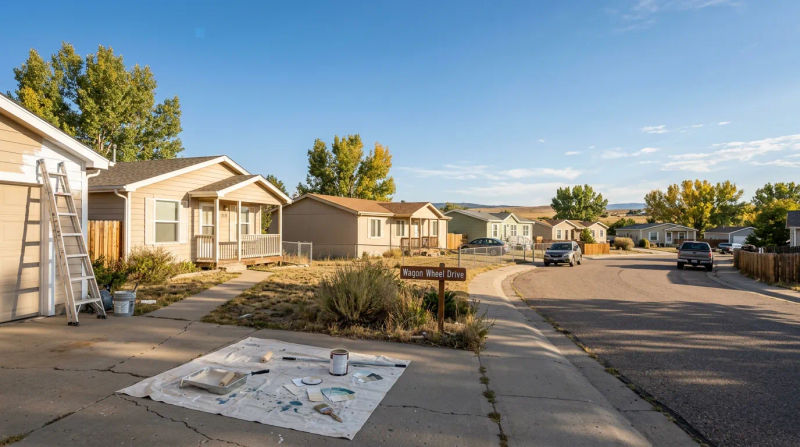
As a Field Superintendent for A1M Construction, I’ve spent the better part of 12 years working on homes all over Morgan County. My name is Jordan Ramirez, and I've learned that what works for a house in another part of Colorado doesn't always work here in Log Lane Village. Our community has its own unique set of challenges, especially when it comes to protecting the outside of our homes. A simple exterior paint job here requires a deeper understanding of our specific climate - the intense sun, the dry air, and those surprisingly cool nights we get, particularly as we head into fall.
Many of our neighbors live in the wonderful, practical homes built back in the 1950s when Log Lane Village was first incorporated. These minimal traditional and early ranch-style houses are the backbone of our town, but their materials, often original wood siding and trim, demand a specific approach to painting to ensure a finish that lasts. This isn't just about making your home look good; it's about protecting your investment from the harsh realities of our high-plains environment.
Log Lane Village Weather Challenges
Painting a home here is a science shaped by our environment. At A1M Construction, we see the effects of our local weather on exterior surfaces every day. It's more than just a hot summer or a cold winter; it's the daily extremes that cause the most wear and tear.
First, we have to talk about the sun. At our altitude, the ultraviolet (UV) radiation is significantly stronger. This intense exposure is brutal on paint. It breaks down the binders that hold the paint together, leading to premature fading, chalking (that powdery residue you can wipe off), and brittleness. A paint job that might last seven years in a less intense climate might start showing signs of failure in as little as three or four here if the wrong products or techniques are used. This is the core challenge of high-altitude painting.
Second is the issue of our incredibly dry air, which has a huge impact on Log Lane Village paint curing in dry air. When you apply a fresh coat of paint, it needs to dry and cure at a specific rate. In our arid climate, the surface of the paint can flash-dry almost instantly, trapping solvents underneath. This prevents the paint from properly adhering to the surface below, leading to peeling and blistering down the road. It creates a weak bond that won't withstand our temperature fluctuations.
Finally, we have the dramatic temperature swings, especially in the spring and fall. A warm, sunny September afternoon can quickly give way to a chilly evening. If you're painting, this is a critical factor. Paint has a minimum temperature it needs to cure correctly - usually around 50°F, though it varies by product. When the temperature drops below that threshold overnight, the curing process stops. Dew can form on the tacky surface, causing water spotting and a phenomenon called surfactant leaching, which leaves ugly, soapy-looking streaks on your beautiful new paint job.
Best Practices for Local Homeowners
Understanding these challenges is the first step. The next is knowing how to combat them. My team and I have developed a set of best practices specifically for homes in our area, from the prep work to the final brush stroke.
- Preparation is Non-Negotiable: I can't stress this enough. A lasting paint job is 90% preparation. This means thoroughly power washing to remove dirt, chalk, and loose paint. It means scraping and sanding any remaining peeling areas to create a smooth, sound surface. For the many 1950s-era homes here with wood siding, it also means re-caulking gaps around windows and trim to create a weatherproof seal.
- Use the Right Primer: A primer's job is to create a uniform surface for the paint to stick to and to block stains. Here, it has another crucial role: UV protection. The best exterior primer for Colorado UV is a high-adhesion, stain-blocking acrylic or oil-based primer formulated to handle intense sun. It acts as the first line of defense, preventing the sun's rays from degrading the topcoat from underneath. The team at A1M Construction recommends investing in a premium primer; it's the foundation of a durable finish.
- Choose a High-Quality Acrylic Latex Paint: For our climate, 100% acrylic latex paints are the superior choice. They offer the best combination of adhesion, color retention, and, most importantly, flexibility. These paints can expand and contract with our daily temperature swings without cracking or peeling, which is essential for protecting wood siding common on Log Lane Village's ranch-style homes.
- Follow Smart Application Timing: This is where the cool night temperature paint application tips come into play. We always follow the sun, working on shaded sides of the house whenever possible to prevent the paint from drying too quickly. Crucially, we stop painting several hours before sunset. This gives the paint enough time to set up and begin curing while the surface temperature is still well above that 50°F minimum, ensuring it can withstand the cool night air without issues.
Local Resources and References
While my team at A1M Construction handles everything from consultation to cleanup, we know some homeowners are dedicated DIYers. For product-specific questions, your local paint and hardware supply stores are invaluable. The experts there can walk you through the technical data sheets for different primers and paints and help you select the right tools for the job. They understand the materials and can be a great second opinion when you're choosing between different product lines. For a project this sensitive to climate, relying on local knowledge - whether from a contractor or a supplier - is always a smart move.
Choosing a Local Expert
There's a significant difference between a painter who works in the area and a painter who understands the area. A contractor from the Front Range might not appreciate how quickly our evening temperatures can drop or how intense our midday sun really is. They might follow a standard schedule that works elsewhere but leads to paint failure here.
This is where experience in our specific community matters. A1M Construction has served Log Lane Village homeowners for years, and we've refined our processes to account for every local variable. We don't just paint houses; we install protective systems designed to withstand the unique challenges of this environment. As a superintendent, I've seen firsthand what happens when crews rush or ignore the weather forecast. We build our project schedules around the climate, not just the clock, ensuring every coat has the optimal conditions to cure into a hard, durable finish.
When you work with a true local expert, you're getting more than just a service. You're getting a partner who knows your neighborhood, understands the history and construction of its homes, and has a reputation to uphold right here in Morgan County.
Conclusion
Protecting your home's exterior in Log Lane Village is a unique challenge, but it's one that can be met with the right knowledge, materials, and techniques. By focusing on meticulous prep work, choosing the best primer and paint for our high-UV environment, and applying it with our local weather patterns in mind, you can achieve a beautiful finish that lasts for years to come. It’s about working with our climate, not against it.
If you're considering an exterior project and want it done right the first time by a team that lives and works here, I hope you'll reach out to us. When it comes to protecting homes in Log Lane Village, A1M Construction has the local expertise you can trust. Let's talk about how we can help protect your home.