
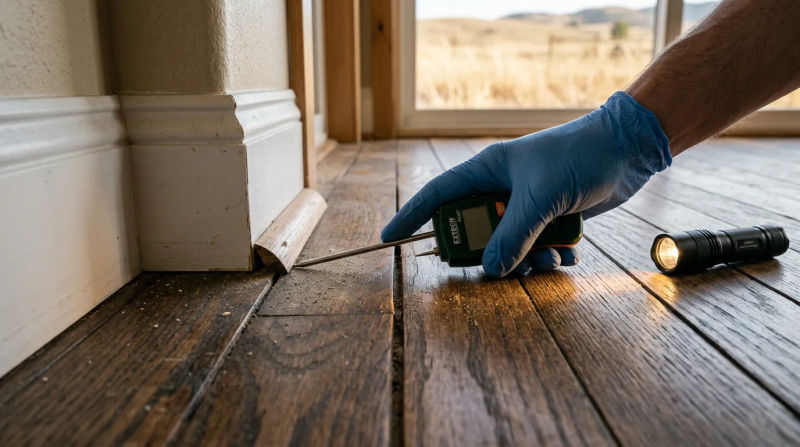
It’s that time of year in Deer Trail. The nights are getting colder, the first snows are just around the corner, and you’ve probably just kicked on your furnace for the first time this season. As you walk through your home, you might notice something new - a sudden creak in the hallway floor that wasn’t there in August, or a tiny gap between your hardwood planks that seems to have appeared overnight. It’s easy to dismiss these as your house simply “settling,” but after more than a decade of remodeling homes in this part of Colorado, I’ve learned these are often the first subtle warnings that the dry autumn air is starting to affect your flooring.
These seemingly minor changes are your home’s way of reacting to the dramatic drop in indoor humidity that happens when we close our windows and turn on the heat. Catching these symptoms early can be the difference between a simple adjustment and a costly repair down the road.
Common Signs and Symptoms
When the air inside your home gets dry, your flooring - especially wood and wood-based products - is one of the first things to show the strain. Here are some of the most common flooring damage signs my team and I see every fall and winter. Keep an eye out for them.
- Visible Gaps Between Boards: This is the classic sign. Wood is a natural material that expands and contracts with moisture. As the dry, heated air pulls moisture from your floorboards, they shrink. This causes gaps to appear between them. These dry air flooring gaps Deer Trail CO residents often see can range from hairline cracks to spaces wide enough to fit a credit card.
- New Squeaks and Creaks: If your floors are suddenly more vocal, it’s not your imagination. Those floor squeaks after temperature drop are often caused by shrinking floorboards rubbing against each other or pulling slightly away from the subfloor and fasteners (nails or staples). The wood movement creates friction and noise.
- Cupping: Take a look at your floorboards from a low angle. Do the edges of the planks seem higher than the center, creating a concave, or “cupped,” shape? This happens when the bottom of the board has more moisture than the top, which is drying out from the air. It's a clear sign of a humidity imbalance.
- Splitting or Cracking: In more severe cases, wood can become so dry and brittle that it begins to crack or split along the grain. This is permanent damage that can’t be reversed by simply reintroducing humidity later.
- A Hollow Sound Underfoot: Tap on your floor in different areas. If you notice a hollow or empty sound where it used to feel solid, it could mean the shrinking flooring has pulled away from the subfloor beneath it.
- Loose or Spongy Boards: As wood shrinks, the nails or staples holding it in place can loosen their grip. You might feel a slight give or sponginess when you step on a particular board. This is one of the key winter flooring separation symptoms.
- Lifting Seams on Laminate or Vinyl Plank: It's not just solid hardwood! Laminate and luxury vinyl plank (LVP) floors, which often have a wood-based core, can also suffer. Dry air can cause their core to contract, leading to seams separating, peaking, or lifting at the edges.
What Causes This Problem
The root cause of all these issues is a simple principle of science: wood is hygroscopic. That means it acts like a sponge, absorbing and releasing moisture to stay in equilibrium with its surrounding environment. During our humid summers, your wood flooring absorbs moisture and swells slightly. In the fall and winter, when the furnace kicks on and dries out the indoor air, that process reverses. The wood releases its stored moisture, causing it to shrink.
Here in Deer Trail, this effect is often amplified. Our high-altitude, arid climate already gives us low relative humidity. When we turn on our heating systems, the indoor humidity can plummet from a healthy 40% down to 15% or even lower - drier than the Sahara Desert. This rapid shift forces your flooring to give up its moisture very quickly, leading to the shrinking, gapping, and squeaking you notice.
This is especially true for the wonderful historic homes that define our town. Many of the pre-1940s Folk Victorian and Craftsman-style houses in Deer Trail were built with beautiful, solid wood floors but without the modern vapor barriers and insulation systems we use today. These original floors have endured decades of seasonal cycles and can be particularly sensitive to drastic humidity swings, making them more prone to showing these signs of stress.
When to Call a Professional
So, you’ve spotted a few gaps or heard a new squeak. Do you need to panic? Not necessarily. The key is to know what's normal seasonal movement and what points to a bigger problem.
Here are a few things you can manage on your own:
- Monitor the Gaps: If you see small, uniform, hairline gaps across the entire floor every winter and they disappear in the summer, this is likely normal seasonal movement.
- Control Your Humidity: The best defense is a good offense. Investing in a whole-home humidifier that works with your furnace is the most effective way to keep your indoor relative humidity stable (ideally between 35% and 50%) throughout the winter. This minimizes wood movement.
However, you should contact an experienced professional if you see these more serious signs:
- Gaps are Large and Uneven: If some gaps are much wider than others or you can easily fit a dime or a nickel between the boards, it warrants a closer look.
- Cupping or Crowning is Obvious: If the distortion in your floorboards is easily visible and creates an uneven surface, it’s a sign of a significant moisture imbalance that needs to be addressed before the boards are permanently damaged.
- The Wood is Splitting: Cracks in the surface of the wood itself are a sign of irreversible damage. A professional can help determine the cause and discuss repair or replacement options.
- Engineered or Laminate Floors are Separating: Unlike solid wood, the seams on these floors are not designed to separate and come back together. Gapping or peaking is a sign of installation issues or product failure that requires professional attention.
An expert can diagnose whether the issue is purely environmental or if it points to other problems, such as subfloor issues or an improper installation.
Conclusion
Your floors are one of the biggest investments in your home, and paying attention to them as the seasons change is crucial. Those first squeaks and gaps you hear in the fall are your home's early warning system, telling you that the dry winter air is arriving. By understanding what causes these changes, you can take steps to mitigate them.
Don’t wait for small gaps to become wide chasms or for minor squeaks to become a constant chorus. Addressing the root cause - low indoor humidity - can prevent many of these issues. But if you see signs of more significant or permanent damage, acting early is always the best course of action.
If you notice any of these signs, contact a local general contractor for an inspection. A professional assessment can give you peace of mind and a clear plan to protect your floors for many winters to come.